
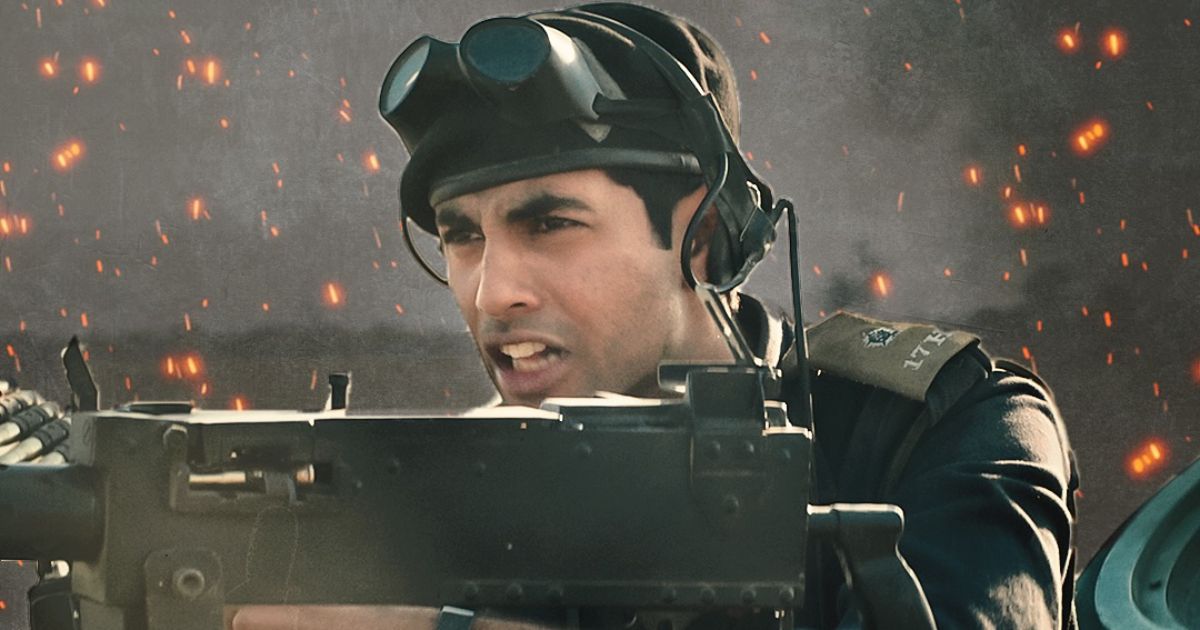
Ikkis Movie Review: A War Story Where Emotions Take Center Stage
Ikkis is not a conventional war film driven by relentless action or thunderous explosions. Directed by Sriram Raghavan, the film chooses a quieter, more reflective path, focusing on the emotional cost of war and the enduring bond between a father and his son. Set against the backdrop of the 1971 Indo-Pak conflict, Ikkis draws inspiration from the real-life heroism of Second Lieutenant Arun Khetarpal, making it as much a human drama as a military chronicle.
Starring Dharmendra and Agastya Nanda in pivotal roles, the film explores courage not just on the battlefield but also in memory, grief, and reconciliation.


Ikkis Movie Review: Plot Overview and Narrative Arc
At the heart of Ikkis is Second Lieutenant Arun Khetarpal, a 21-year-old Indian Army tank commander portrayed by Agastya Nanda. Born into a proud military lineage, Arun carries the weight of legacy with quiet determination. His father, Brigadier M.L. Khetarpal, played by Dharmendra, is a retired officer whose life has been shaped by duty and discipline.
When war breaks out in 1971, Arun eagerly steps into combat. His bravery soon distinguishes him among his peers. During the decisive Battle of Basantar, Arun defies evacuation orders and continues fighting despite his tank being engulfed in flames. His actions halt enemy advancement and change the course of the battle, but at the cost of his own life. This supreme sacrifice earns him the Param Vir Chakra, making him the youngest recipient of India’s highest military honor.
The narrative then shifts decades later, as Arun’s elderly father travels to present-day Pakistan. Through conversations, memories, and unexpected encounters, he pieces together the full story of his son’s final moments. This dual timeline gives Ikkis its emotional depth and reflective tone.
Ikkis Movie Review: Script and Screenplay Analysis
One of the strongest aspects of Ikkis is its commitment to authenticity. The film does not fictionalize heroism for convenience. Every major character and event is rooted in reality, lending the story a rare sincerity. The screenplay by Sriram Raghavan, Arijit Biswas, and Pooja Ladha Surti opts for restraint over dramatization.
While the pacing may feel measured for viewers accustomed to fast-moving war films, this deliberate tempo allows the emotional layers to unfold naturally. The alternating structure between the father’s present-day journey and the son’s wartime experiences creates a poignant contrast between youth and age, action and reflection.
Dialogues stand out for their simplicity and emotional weight, especially the conversations between the Indian brigadier and his Pakistani host. These moments highlight shared humanity and subtly underline the tragedy of division and conflict without becoming preachy.
Ikkis Movie Review: Performances and Character Portrayals
Dharmendra delivers a deeply affecting performance as Brigadier Khetarpal. His portrayal is understated, dignified, and emotionally resonant. Small gestures, silences, and expressions carry immense weight, particularly in scenes where grief meets pride. His performance feels like a fitting culmination of a legendary career.
Agastya Nanda proves his mettle as Arun Khetarpal. He brings sincerity, courage, and vulnerability to the role, avoiding overt heroics. His growth from a young officer to a battle-hardened soldier feels organic and convincing.
Jaideep Ahlawat, as the Pakistani brigadier, is quietly powerful. His compassion and restraint add complexity to the narrative. Simar Bhatia, in her debut role as Kiran, makes a confident impression despite limited screen time. Rahul Dev and Sikandar Kher offer solid support as senior army officers, while the extended supporting cast contributes effectively to the film’s realism.
Ikkis Movie Review: Direction, Music, and Technical Craft
With Ikkis, Sriram Raghavan steps away from his trademark thriller style and demonstrates remarkable control over a restrained, emotionally driven narrative. The war sequences are realistic and grounded, avoiding unnecessary spectacle. The focus remains on strategy, tension, and human stakes rather than visual excess.
Emotional scenes are handled with sensitivity, never slipping into melodrama. The climax, where the full truth of Arun’s sacrifice is revealed to his father, is especially moving and lingers long after the film ends.
The music, composed by White Noise Collectives, is melodic and meaningful but sparingly used. While the songs are well-crafted, they appear briefly. Sachin-Jigar’s background score, however, elevates the emotional and dramatic beats with subtle intensity.
Ikkis Movie Review: Final Verdict
Ikkis is a war film that chooses heart over hype. It honors bravery not through spectacle but through remembrance, restraint, and emotional honesty. Dharmendra’s performance alone makes the film worth watching, but Ikkis succeeds far beyond that, offering a thoughtful meditation on sacrifice, legacy, and love.
This is a film best experienced with patience and openness, and it rewards viewers with a deeply moving cinematic journey.
Ikkis Movie Review: Frequently Asked Questions
Is Ikkis based on a true story?
Yes, Ikkis is inspired by the real-life story of Second Lieutenant Arun Khetarpal, a Param Vir Chakra awardee from the 1971 Indo-Pak war.
Is Ikkis an action-heavy war film?
No, Ikkis focuses more on emotional depth and realism rather than constant action or large-scale battle spectacle.
How is Dharmendra’s performance in Ikkis?
Dharmendra delivers one of his most restrained and emotionally powerful performances, making it a highlight of the film.
Is Ikkis suitable for all audiences?
The film is suitable for viewers who appreciate slow-burn dramas, historical narratives, and emotionally driven storytelling.
Where can I watch Ikkis?
Ikkis is currently available as a theatrical release.